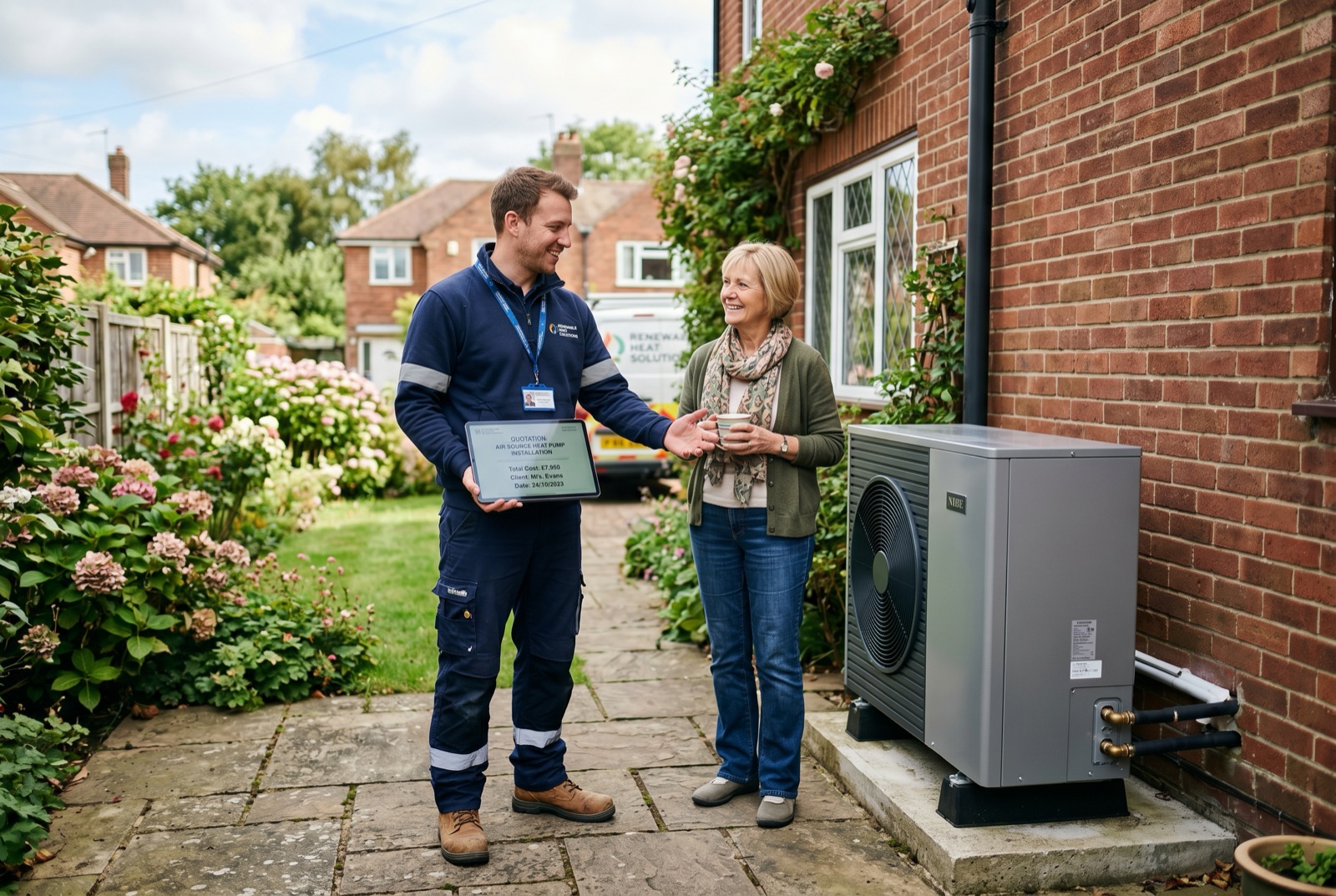
If you are planning a home upgrade this year, the federal government will likely pay for part of it. Between two long-standing tax credits and a wave of new rebates created by the Inflation Reduction Act, a typical project that adds insulation, swaps a furnace for a heat pump, or puts solar on the roof can come back with thousands of dollars in support. The catch is that the rules sit in different places. Some money arrives as a credit on your tax return the following spring; some arrives as an upfront discount at the point of sale. This guide untangles the three buckets that matter most in 2026, what each is worth, and the practical steps to claim them without leaving money on the table.
The three buckets of federal help
It helps to think of federal support as three separate pots, because they are funded and claimed in completely different ways. The first two are tax credits you claim when you file your federal return. The third is a set of rebates funded by the Inflation Reduction Act and run through your state energy office, which means the money can come off the price before you pay.
- The Energy Efficient Home Improvement Credit, known by its tax-code section number 25C. This covers insulation, air sealing, efficient windows and doors, heat pumps, heat pump water heaters, and electrical panel upgrades.
- The Residential Clean Energy Credit, section 25D. This covers solar panels, battery storage, solar water heating, geothermal heat pumps, and small wind.
- The IRA Home Energy Rebates, two programs (the HOMES whole-house efficiency rebate and the High-Efficiency Electric Home Rebate, often called HEEHRA) administered state by state and aimed especially at low- and moderate-income households.
The 25C credit: 30% back, up to $3,200 a year
The Energy Efficient Home Improvement Credit is the workhorse for everyday upgrades. It returns 30% of the cost of qualifying improvements, but with annual caps rather than a single lifetime limit. The headline ceiling is $1,200 per year for most efficiency measures, with a separate and more generous $2,000 per year just for heat pumps, heat pump water heaters, and biomass stoves. Because those two limits stack, a household that installs a heat pump and adds insulation in the same year can claim up to $3,200.
The annual reset is the strategic detail most people miss. Because the limits refresh every January, splitting a larger retrofit across two tax years can meaningfully increase what you recover. Installing insulation and new windows in December and the heat pump the following January, for example, gives you two separate $1,200 efficiency allowances plus the $2,000 heat pump allowance. One important rule from 2025 onward: many qualifying products now need a manufacturer-issued PIN (a Product Identification Number) to be claimed, so keep the documentation your installer gives you.
The 25D credit: 30% on solar, batteries and geothermal
The Residential Clean Energy Credit is where the big numbers live. It returns 30% of the total installed cost of solar panels, battery storage of 3 kWh or larger, solar water heating, geothermal (ground-source) heat pumps, and small wind, with no dollar cap at all. Because there is no ceiling, the larger the installed cost of your system, the larger the credit, so on a rooftop solar array or a geothermal system the 30% can come to several thousand dollars. Batteries qualify on their own merits now, so you can add storage to an existing solar array and still claim 30% on the battery.
Two features make 25D especially valuable. First, it is nonrefundable but it carries forward: if your credit is larger than your tax liability this year, the unused portion rolls to next year rather than being lost. Second, there is no income limit, so it is available regardless of what you earn. The 30% rate is the figure to plan around for 2026, but federal clean-energy incentives have been a moving target, so confirm the current rate and any phase-out dates on the IRS website before you sign a contract.
IRA rebates: money off at the point of sale
The Inflation Reduction Act created two rebate programs that work very differently from tax credits, because the money is designed to come off the price upfront rather than arriving months later on your return. They are funded federally but run by each state's energy office, which is why the rollout has been staggered and why availability varies depending on where you live.
- The High-Efficiency Electric Home Rebate (HEEHRA) targets low- and moderate-income households and covers up to $8,000 for a heat pump, $1,750 for a heat pump water heater, $840 for an electric stove or heat pump clothes dryer, plus money toward wiring and panel upgrades. Households below 80% of area median income can have 100% of qualifying costs covered up to the caps; those between 80% and 150% get 50%.
- The HOMES rebate rewards whole-house energy savings, paying more the deeper the modeled or measured reduction in energy use, with higher amounts again for lower-income households.
- You generally cannot claim both IRA rebates on the exact same measure, but you can pair a rebate with the 25C or 25D tax credit on the same project, which is where the real savings stack up.
How to claim, step by step
The mechanics differ between credits and rebates, but the sequence below covers a typical project that uses both.
- Confirm the upgrade qualifies and that the specific product meets the efficiency standard (for heat pumps, look for the relevant ENERGY STAR or CEE tier your credit requires).
- Check your state energy office for an open IRA rebate and, if eligible, apply or use an approved contractor so the discount comes off your invoice.
- Keep every receipt, the manufacturer certification statement, and any product PIN your installer provides.
- At tax time, file IRS Form 5695 to claim the 25C and 25D credits on your federal return.
- Roll any unused 25D credit forward to the following year if it exceeds your tax liability.
Tax credits arrive in the spring; rebates can arrive at the register. Knowing which is which is the difference between budgeting for the full price and budgeting for the net price.
The Renovation Register Team
One last reminder: tax credits reduce what you owe the IRS, so their real-world value depends on having enough tax liability to absorb them, and the rebate programs and credit rates can be revised by Congress and the IRS. Treat the figures here as a 2026 planning baseline, verify the current numbers on IRS.gov and your state energy office, and ask a licensed contractor to confirm a product qualifies before you commit. Done right, the combination of a 25C or 25D credit and an IRA rebate can cover a large share of a serious home upgrade.